Overview
Create an employee account to give staff access to the PAD and, when required, Tabit Office. The employee name appears on reporting and guest checks.
Create the employee
-
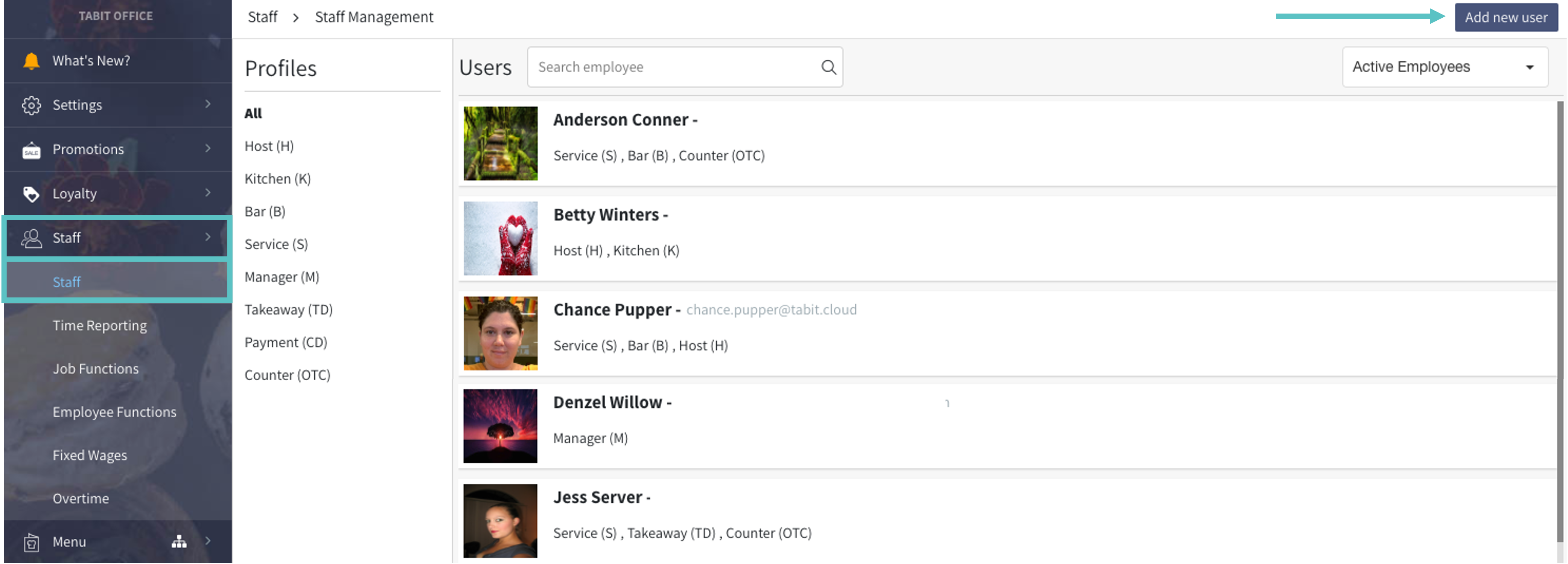
In Tabit Office, open Staff > Staff Management and select +Add employee.
-
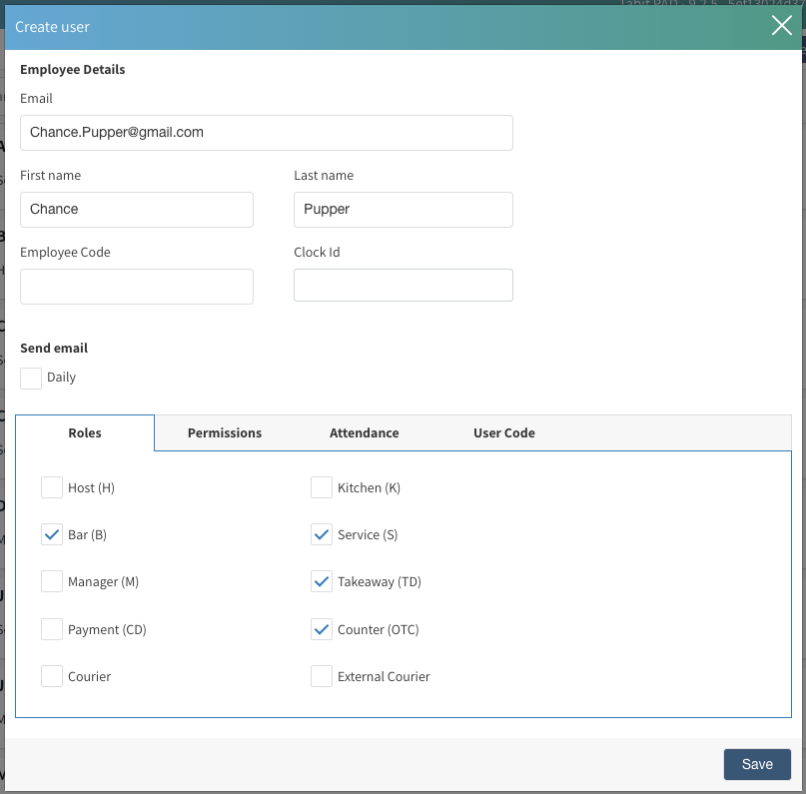
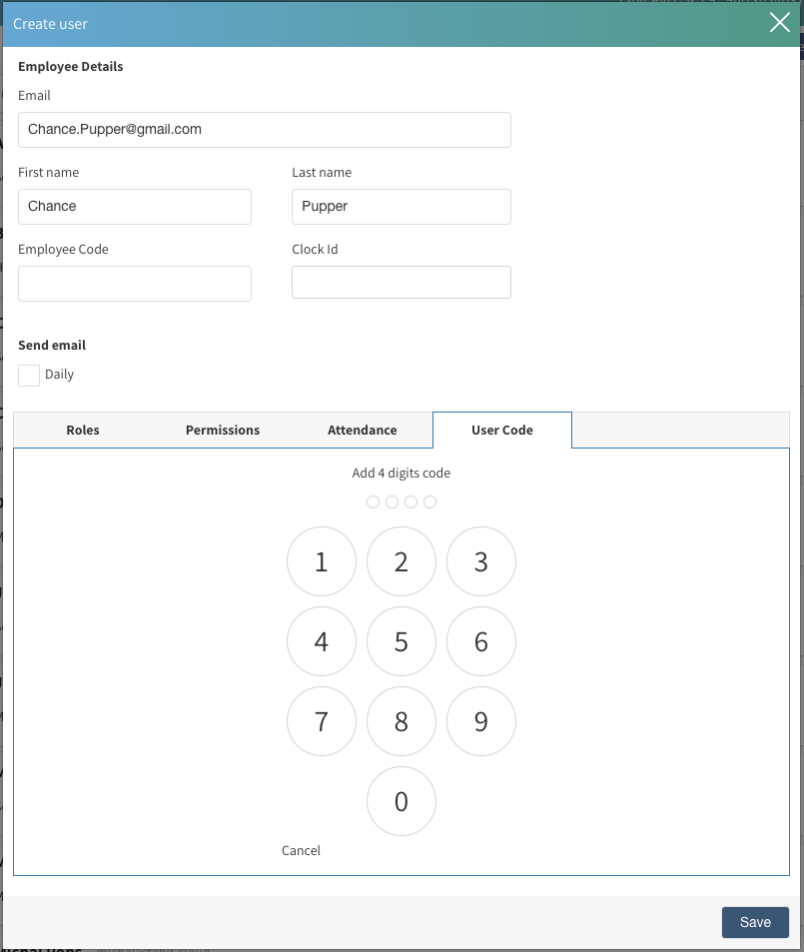
Enter the employee’s first and last name and a unique email address. The email cannot be changed after the user is created.
-
Set the four-digit PIN the employee will use to sign in on the PAD.
-
Enter the employee code used by Payroll so time reporting matches the payroll record. If left blank, a code is generated automatically.
-
Choose whether the employee should receive the end-of-day email.
Assign profiles and job functions
-
In Profiles & Attendances, enable the profiles the employee needs. An employee without an assigned profile cannot access the PAD.
-
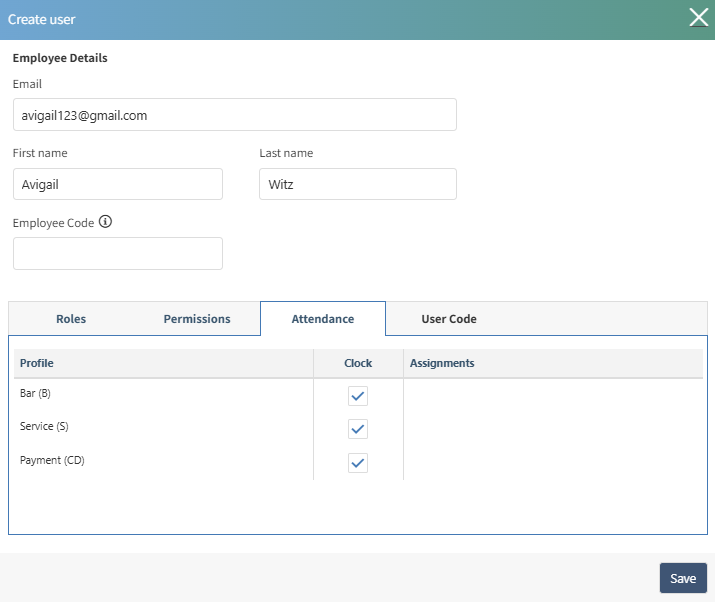
Set the clock-in/out behavior for each profile. Bartenders also need the payment (CD) role for quick access to their assigned cash drawer.
-
Use the inline job-function dropdown to search for and select assignments. These assignments are saved with the new employee; creating the employee without assignments is also supported.
-
Users with employee-rate permission can view default rates and set custom rates. Users without it can select assignments, but rate information remains hidden.
See Assigning and Updating Employee Functions for inherited rates, overrides, and resetting a custom rate.
Assign Office permissions and save
-
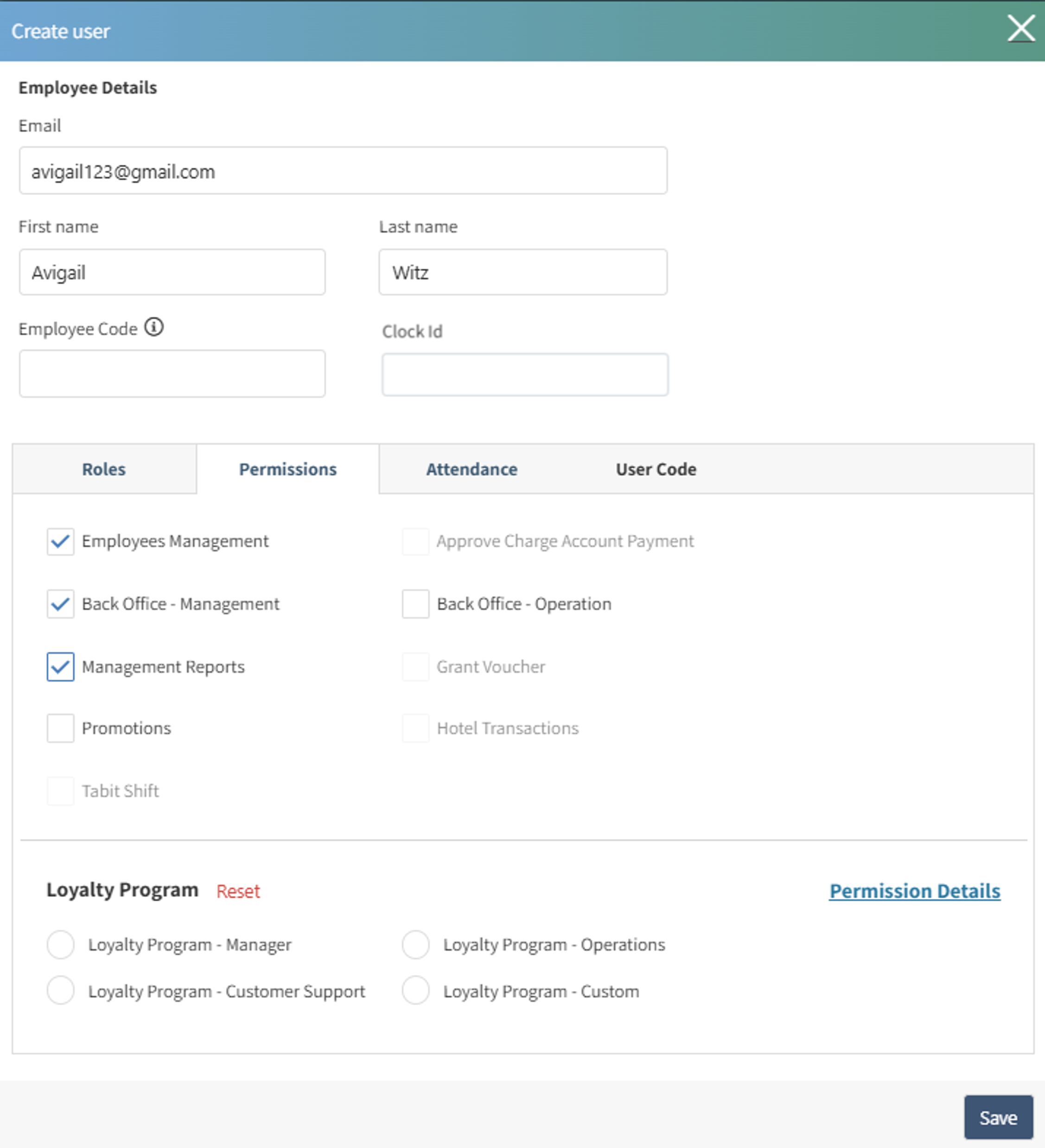
Expand Permissions and select the access required for the employee’s duties. Select All assigns every permission in that section.
-
Review the profile, attendance, assignment, and permission settings, then select Save in the upper-right corner.
Permissions can expose sensitive information and product settings. Review access carefully before saving. See the employee permissions reference.
The new employee receives an email invitation to create their profile and update their photo. For the alternative PAD workflow, see Adding a New Employee on the PAD.
Earlier interface reference
The video and screenshots below show the earlier tab-based employee form. Current versions use Staff Management with inline profiles, attendance, job functions, and permissions as described above.